
Coding Bootcamps vs Traditional Degrees
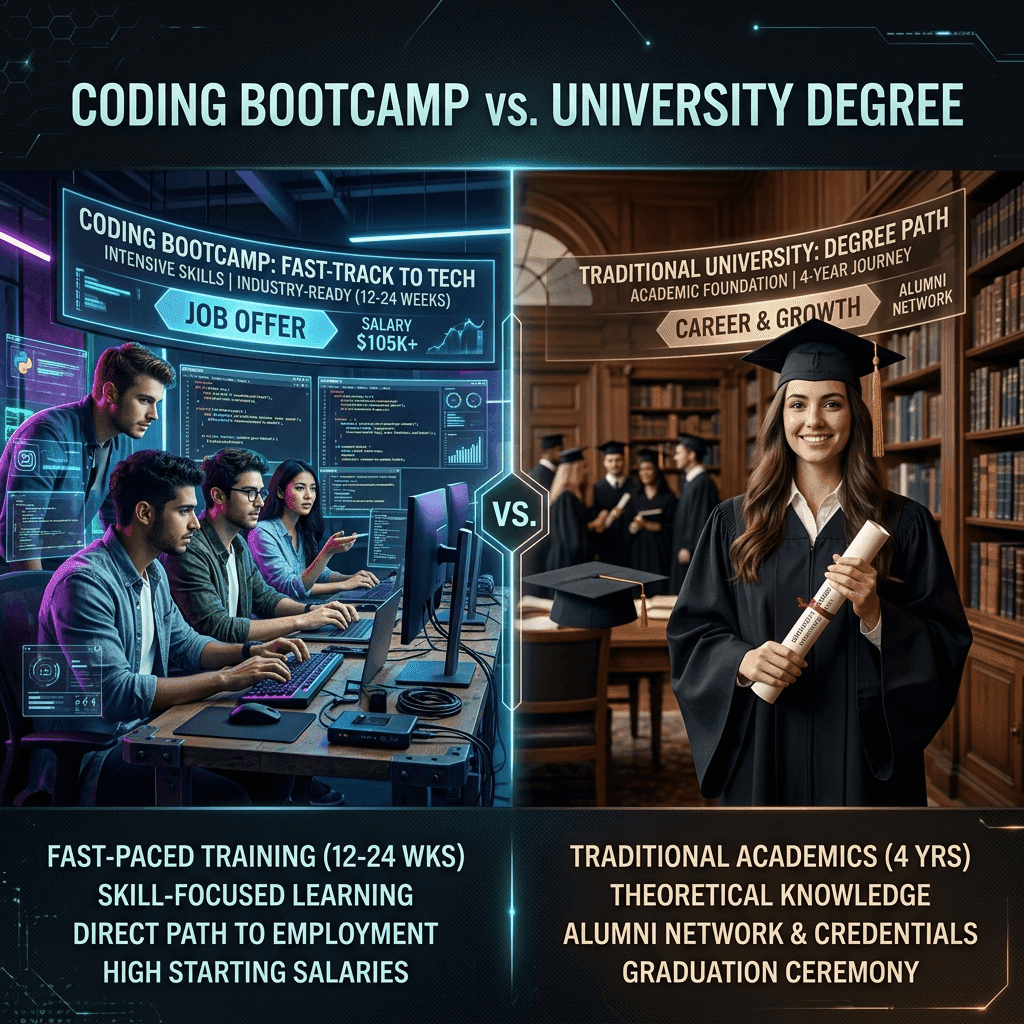
Neither a coding bootcamp nor a traditional computer science degree is universally "better" — they optimize for different things, and the right choice depends heavily on your timeline, budget, and career goals.
Neither a coding bootcamp nor a traditional computer science degree is universally "better" — they optimize for different things, and the right choice depends heavily on your timeline, budget, and career goals.
Time and Cost
A traditional CS degree typically takes 3–4 years and involves substantial tuition and opportunity cost (years not earning a full salary). A focused coding bootcamp or skills program typically runs weeks to a few months and costs a fraction of degree tuition — the tradeoff is depth of coverage, not necessarily quality of what's covered.
Depth vs Focus
A CS degree covers computer science broadly — algorithms, data structures, computer architecture, theory — much of which is valuable for certain career paths (particularly large tech companies with rigorous technical interviews, or roles in research and systems-level work) but isn't directly used in most day-to-day web or app development jobs. A bootcamp or focused program instead concentrates entirely on the practical skills needed to build and ship real applications, skipping theoretical breadth that a working developer may never directly use.
Job Market Reality
Increasingly, employers — especially startups and small-to-mid-size companies — care most about demonstrated ability: a portfolio, deployed projects, and the ability to explain your own code in an interview. Larger, more traditional companies and product-based tech giants sometimes still weight formal degrees more heavily, particularly for very senior or research-oriented roles. Knowing which type of employer you're targeting matters when choosing your path.
What Bootcamps/Skills Programs Do Well
- Get you to a job-ready skill level faster and at lower cost.
- Focus entirely on current, practical, in-demand tools.
- Often include direct project-building and portfolio development as the core method, not an add-on.
What They Don't Replace
- Deep theoretical computer science knowledge (useful for certain specialized or research roles).
- The broader academic credential some employers and visa/immigration processes specifically require.
- The multi-year campus experience and network some students specifically want.
A Practical Way to Decide
Ask yourself: Do I need a specific credential for a specific reason (an employer requirement, an immigration pathway, personal preference)? If yes, a degree may be necessary regardless of other factors. If your actual goal is simply "I want to be employable as a developer or marketer as efficiently as possible," a focused, project-based program is often the faster, lower-cost route to that specific outcome.
They're Not Always Mutually Exclusive
Many people combine both — completing a degree in an unrelated field, then adding a focused skills program to pivot into tech or marketing, or doing a bootcamp early and pursuing further formal education later if a specific role requires it.
Considering a focused path instead of a multi-year degree?
Explore our courses to see how our programs are structured, or contact us with questions about which path fits your goals.
Explore Our CoursesRecent Posts

Teacher Training & Education

Aviation & Logistics
Aviation & Airport Management: The Complete Blueprint for Airline Careers

Aviation & Logistics
Logistics & Supply Chain Management: Navigating Global Trade & Maritime Ports

Finance & Accounting
International Accounting: Mastering IFRS, GCC VAT & Corporate Finance
Related posts

Marketing / Strategy
Technology / AI
AI in Marketing: Redefining Industry Standards
App Development