
MERN Stack Mastery: Building Modern Web Apps
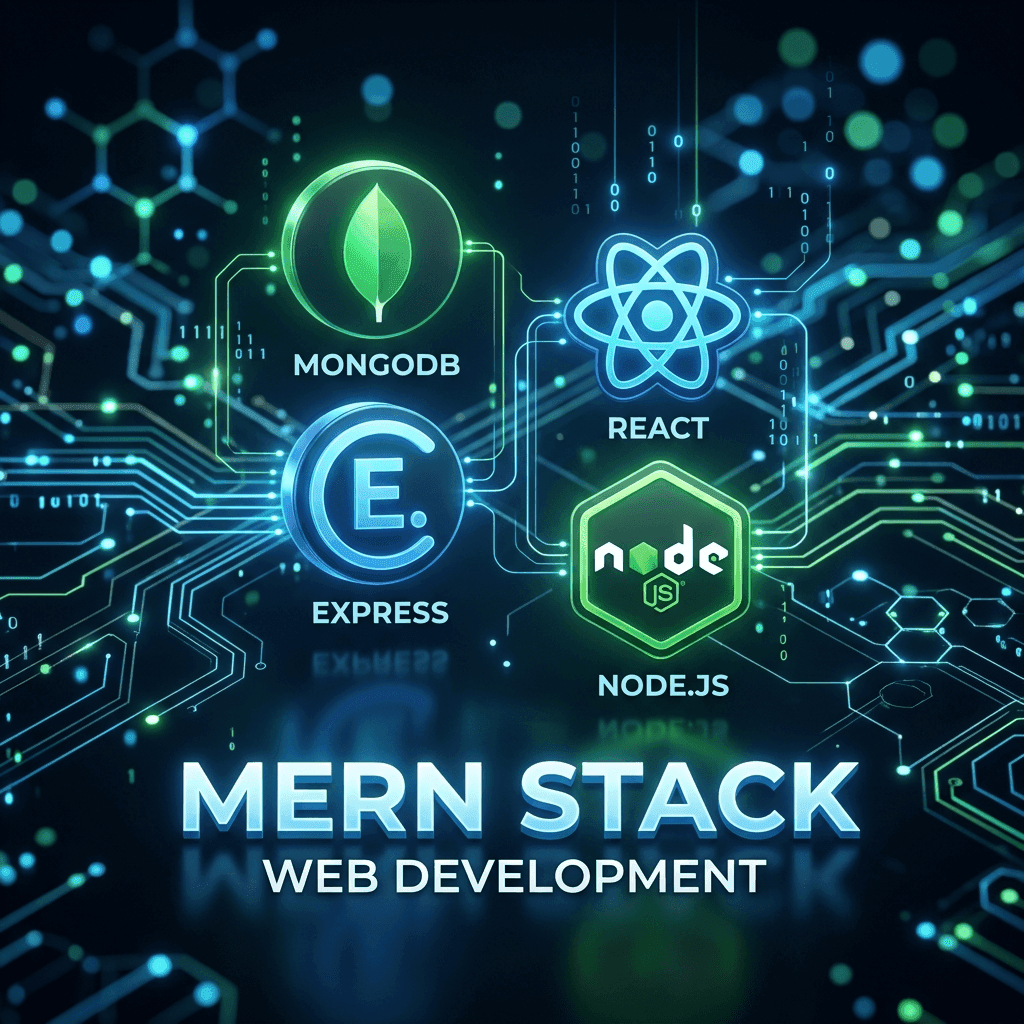
MERN — MongoDB, Express.js, React, and Node.js — remains one of the most in-demand web development stacks in 2026, and for a specific reason: it's four tools that all speak JavaScript, letting one developer build an entire application, front to back, without switching languages.
MERN — MongoDB, Express.js, React, and Node.js — remains one of the most in-demand web development stacks in 2026, and for a specific reason: it's four tools that all speak JavaScript, letting one developer build an entire application, front to back, without switching languages.
What Each Piece Actually Does
- MongoDB: The database, storing your application's data in a flexible, document-based format rather than rigid tables.
- Express.js: A lightweight framework that runs on your server, handling requests between your front end and your database.
- React: The front-end library that builds what users actually see and interact with in the browser.
- Node.js: The runtime that lets JavaScript run on the server, not just in the browser.
Together, they form a complete pipeline: a user clicks something in React, that action travels through Express, gets stored or retrieved from MongoDB, and the result comes back to update the screen — all in one language throughout.
Why MERN Still Dominates Hiring
Full stack job postings across India, including Kerala, continue to require MERN more than any other single combination — largely because it lets startups and small teams hire one developer who can handle an entire application, rather than separate front-end and back-end specialists. For companies watching costs closely, that efficiency matters.
What "Mastery" Actually Looks Like
Knowing the syntax of all four tools isn't the same as being able to build with them. Real proficiency looks like:
- Building a complete CRUD (create, read, update, delete) application from scratch, not just following a tutorial.
- Understanding how to structure a React front end that talks cleanly to an Express/Node backend via REST APIs.
- Knowing how to model data properly in MongoDB rather than dumping everything into one collection.
- Being able to deploy your finished application somewhere real (not just running it locally) and troubleshoot what breaks when you do.
A Realistic Learning Path
- JavaScript fundamentals — you can't skip this to jump straight to React.
- React — components, state, and how data flows through an interface.
- Node.js and Express — building a server and API endpoints.
- MongoDB — data modeling and queries.
- Connecting all four into one working application.
- Deployment — getting your app live on the internet, not just on your laptop.
Most learners underestimate step 6, but it's often what separates a portfolio that impresses an interviewer from one that doesn't — a live, working link is worth more than a GitHub repo alone.
What You Can Build to Prove It
A strong MERN portfolio project isn't a to-do list clone — it's something with real complexity: user authentication, a proper database relationship (users who own posts, orders, or bookings), and a deployed, working link you can hand to anyone.
Want a structured path through all of this?
Our Full Stack Development course covers the entire MERN stack over 6 months, ending with three deployed portfolio projects.
Learn More About the CourseRecent Posts

Teacher Training & Education

Aviation & Logistics
Aviation & Airport Management: The Complete Blueprint for Airline Careers

Aviation & Logistics
Logistics & Supply Chain Management: Navigating Global Trade & Maritime Ports

Finance & Accounting
International Accounting: Mastering IFRS, GCC VAT & Corporate Finance
Related posts

Marketing / Strategy

Technology / AI
AI in Marketing: Redefining Industry Standards
App Development