

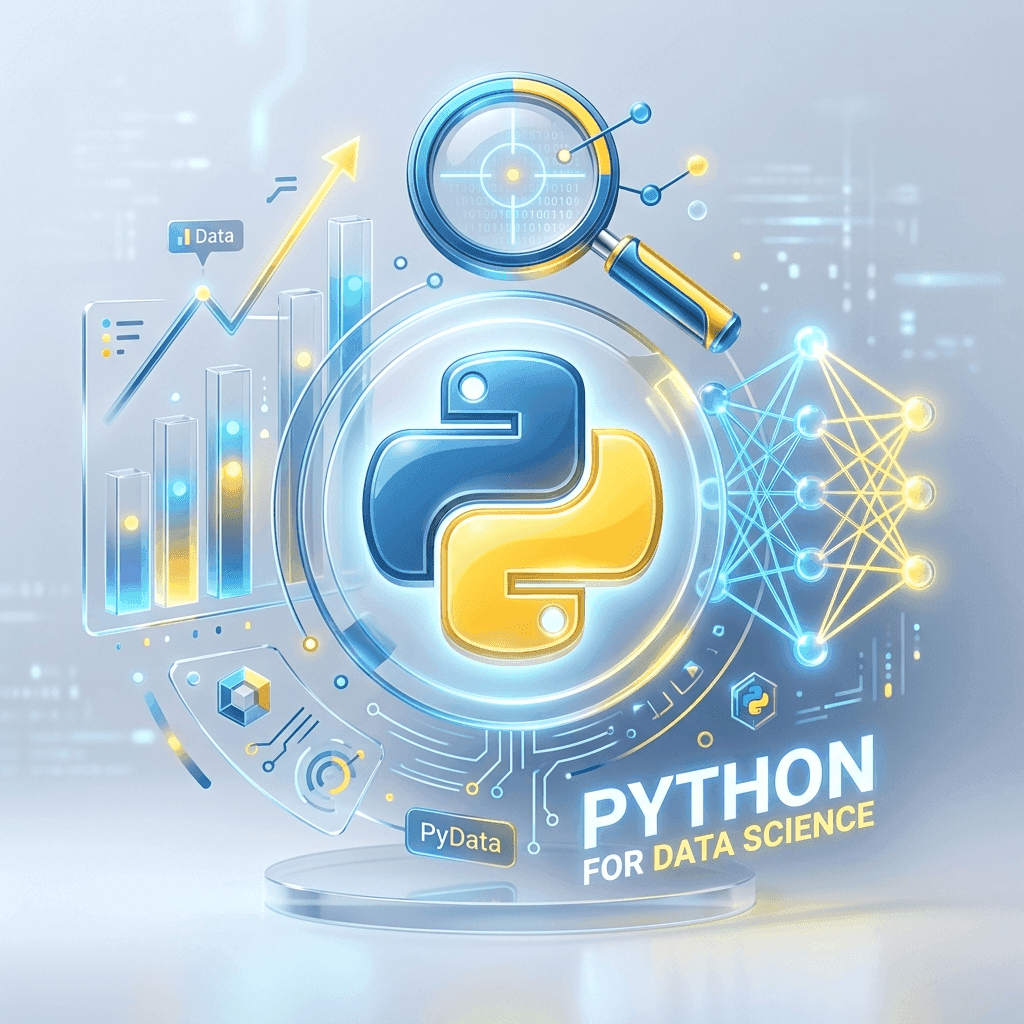
Python for Data Science: A Complete Roadmap
Python remains the dominant language for data science, largely because its libraries (pandas, NumPy, scikit-learn) make working with data faster and more readable than almost any alternative. If you're starting from zero, here's a realistic, ordered roadmap.
Python remains the dominant language for data science, largely because its libraries (pandas, NumPy, scikit-learn) make working with data faster and more readable than almost any alternative. If you're starting from zero, here's a realistic, ordered roadmap.
Stage 1: Python Fundamentals
Before touching any data science library, get comfortable with core Python — variables, loops, functions, and basic data structures like lists and dictionaries. Skipping this stage to jump straight into pandas usually backfires; you'll spend more time confused by basic syntax errors than actually learning data concepts.
Stage 2: Data Handling with pandas and NumPy
This is where data science actually starts. Pandas lets you load, clean, filter, and reshape data (think of it as a programmable spreadsheet), while NumPy handles the underlying numerical operations efficiently. Most real-world data science work — before any modeling happens — is spent here: cleaning messy data, handling missing values, and reshaping datasets into a usable form.
Stage 3: Data Visualization
Learn to use libraries like Matplotlib and Seaborn to turn raw numbers into charts that reveal patterns — trends over time, relationships between variables, outliers worth investigating. A data scientist who can't visually communicate a finding struggles to make it useful to anyone else.
Stage 4: Statistics Fundamentals
You don't need a statistics degree, but you do need working knowledge of concepts like mean/median/standard deviation, correlation, and basic hypothesis testing. This is what lets you say "this pattern is meaningful" rather than just "this pattern exists."
Stage 5: Machine Learning Basics with scikit-learn
Once you're comfortable with data handling and basic stats, scikit-learn introduces you to core machine learning concepts — training a model, splitting data into training/test sets, and evaluating how well a model actually performs (not just whether it runs without errors).
Stage 6: A Real, End-to-End Project
Pick a real dataset (not a toy one you've seen a hundred tutorials use) and take it from raw data to a finished insight or model. This is what separates "I've done some Python tutorials" from "I can do data science" — and it's what belongs on your resume.
Common Mistakes to Avoid
- Jumping to machine learning too early: Most real-world data science time is spent cleaning and understanding data, not training models — beginners who skip straight to modeling often build on a shaky foundation.
- Only using clean, tutorial-provided datasets: Real data is messy. Practicing exclusively on pre-cleaned datasets leaves you unprepared for actual work.
- Not learning to communicate results: A correct analysis that no one can understand from your presentation doesn't help a business make a decision.
A Realistic Timeline
With consistent, structured practice, most beginners can move from zero Python experience to being able to complete an independent, end-to-end data analysis project within 3–5 months, depending on prior math comfort and time invested per week.
Interested in a structured path through this roadmap?
Contact us to ask about our Data Science course offerings and upcoming batches.
Contact Our TeamRecent Posts

Teacher Training & Education

Aviation & Logistics
Aviation & Airport Management: The Complete Blueprint for Airline Careers

Aviation & Logistics
Logistics & Supply Chain Management: Navigating Global Trade & Maritime Ports

Finance & Accounting
International Accounting: Mastering IFRS, GCC VAT & Corporate Finance
Related posts

Marketing / Strategy
Technology / AI
AI in Marketing: Redefining Industry Standards
App Development